
National 5 Physics Tutor Glasgow — Expert SQA Tuition for Every Unit
All three SQA units — Dynamics & Space, Electricity & Energy, Waves & Radiation — taught one-to-one by a Glasgow specialist with 20+ years' experience.
It usually happens sometime in October. A student who managed National 4 Physics without much trouble opens their National 5 jotter and finds that Dynamics now involves three different equations — and they are no longer sure which one applies. The subject has not become impossible; it has become a different kind of subject, one that asks you to think rather than simply recall.
My name is Mohammad Raza, and I have taught National 5 Physics in Glasgow for over 20 years — unit by unit, question type by question type, marking scheme by marking scheme. In two decades I have not yet met a student who could not be turned around with the right support, a little time, and the right approach.
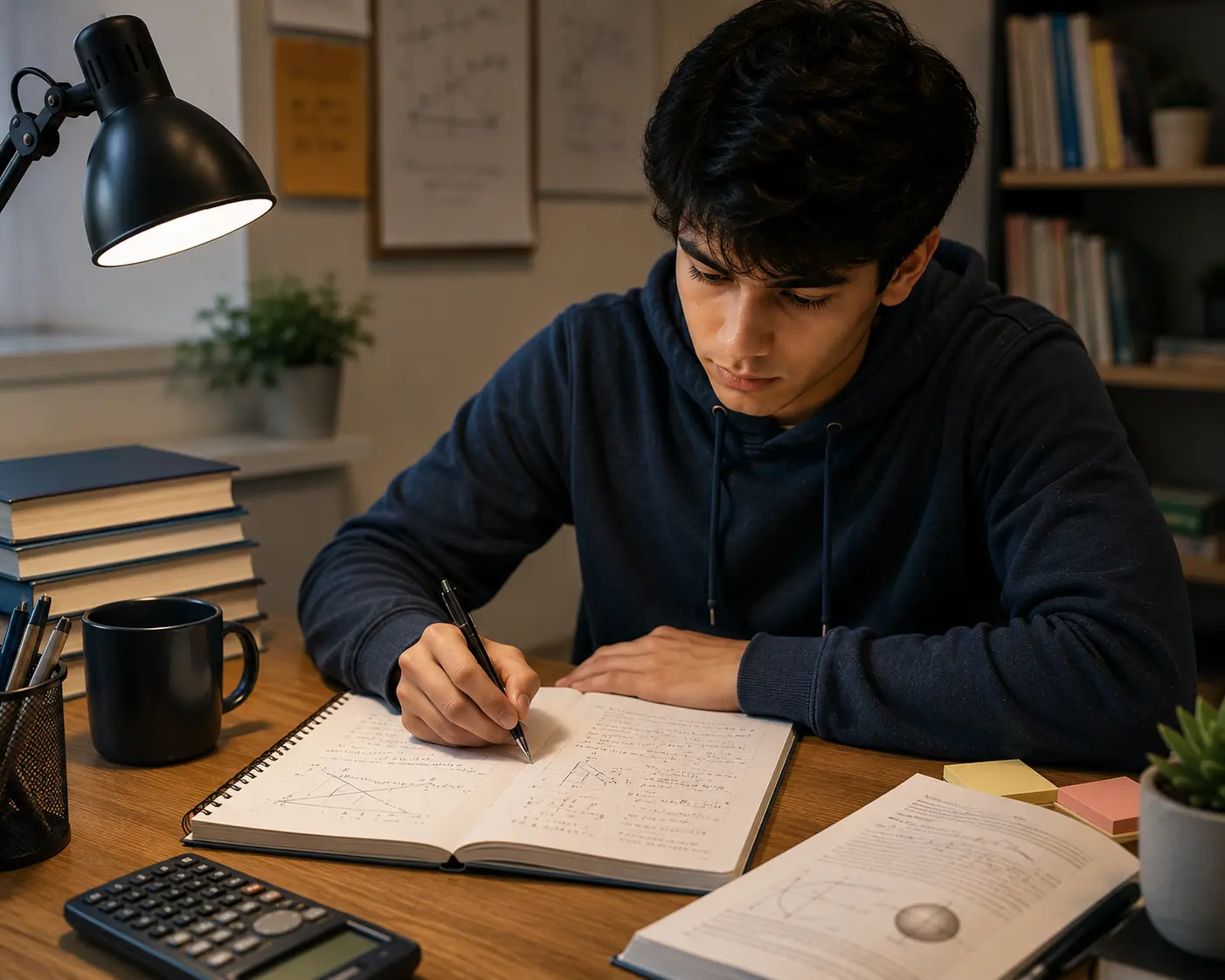
This page explains exactly what I cover: all three SQA units, how sessions are structured, what past paper practice looks like, and what happens in a first session. As part of our wider work as a physics tutor Glasgow families trust, we support students at every SQA level from National 4 through to Advanced Higher, both in person and online across Scotland. Students who go on to Higher Physics find the foundation built here invaluable.
Why National 5 Physics is harder than students expect — and easier to fix than they think
Most students expect National 5 to be National 4 with more content stacked on top. It isn't. The exam tests whether you can apply physics in unfamiliar situations, inside 3–5 mark questions where every line of working earns or loses marks. After 20 years teaching this course, most students don't have a broad "physics problem" — they have one specific gap. Usually one of these three:
Which equation?
Several formulas could apply and the student doesn't know which one the question is actually asking for. A technique gap, not a knowledge gap.
What the marker rewards
They don't understand what the SQA marking scheme actually credits in a written answer — so marks they earned slip away on the page.
Freeze on application
Taught to memorise rather than understand, they freeze the moment a question looks unfamiliar. Name the real gap and the work becomes obvious.
That gap is almost always fixable — faster than the student expects. Every unit has a logical structure underneath it, and once a student sees it, the exam stops feeling arbitrary and starts feeling navigable. The first session is usually enough to identify exactly what's going wrong.
National 5 Physics units — what we cover and how we teach it
The course is built on three units, and I teach each through the lens of what the exam actually tests — not just what the textbook explains. Here's what each involves, and where students tend to lose marks.
Dynamics and Space
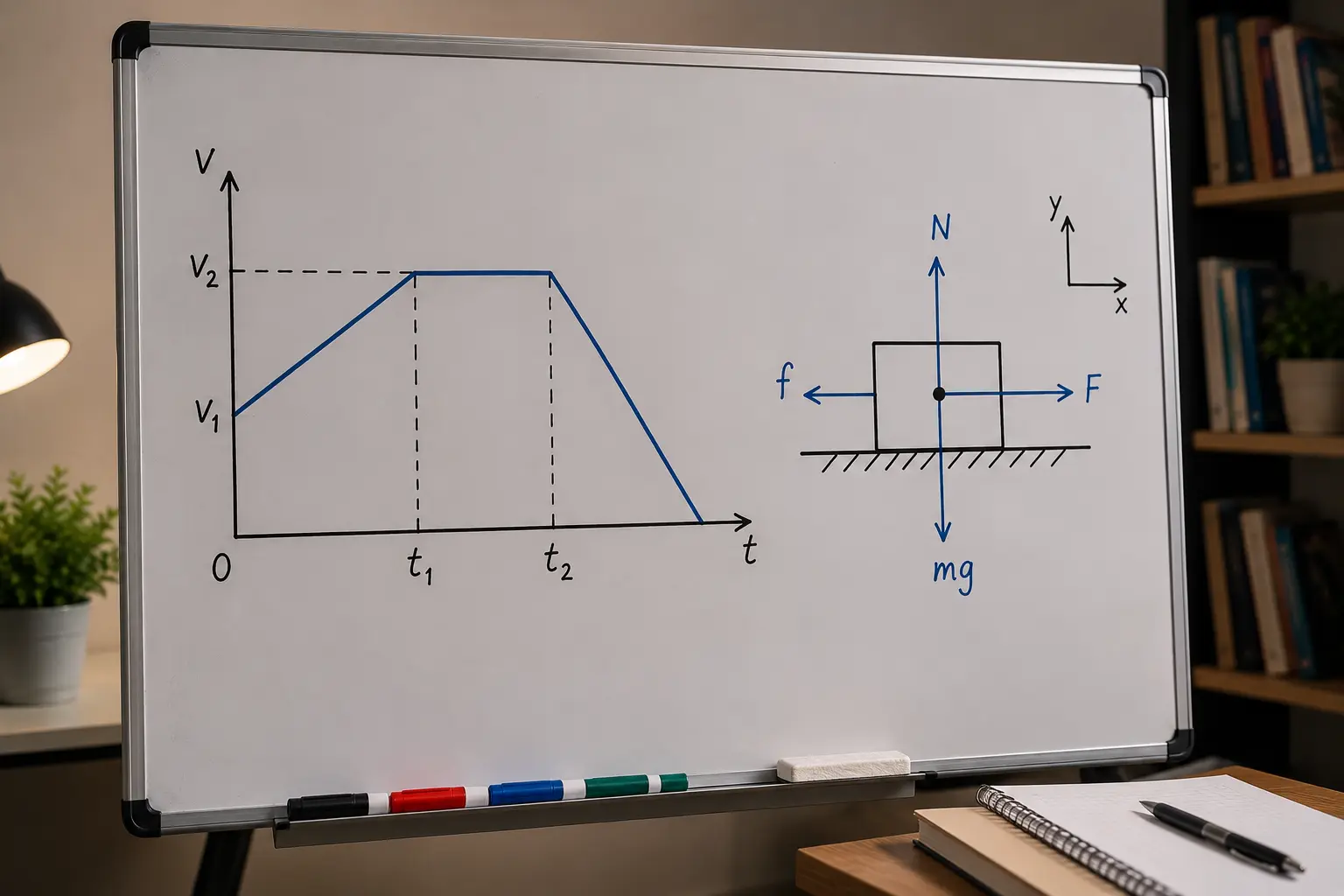
Forces, Newton's laws, velocity-time graphs, projectile motion and the physics of space. On paper the most approachable unit — in the exam it produces some of the most avoidable lost marks. Students panic on velocity-time graphs and reach for the wrong relationship; on projectiles they forget the single key principle — horizontal and vertical motion must be treated completely independently. These are technique gaps, and technique can be taught.
From the first session we work with real SQA past paper questions, marking scheme open, so students learn the method SQA expects and the working that earns marks. Reinforce it between sessions with physics past papers practice.
Electricity and Energy
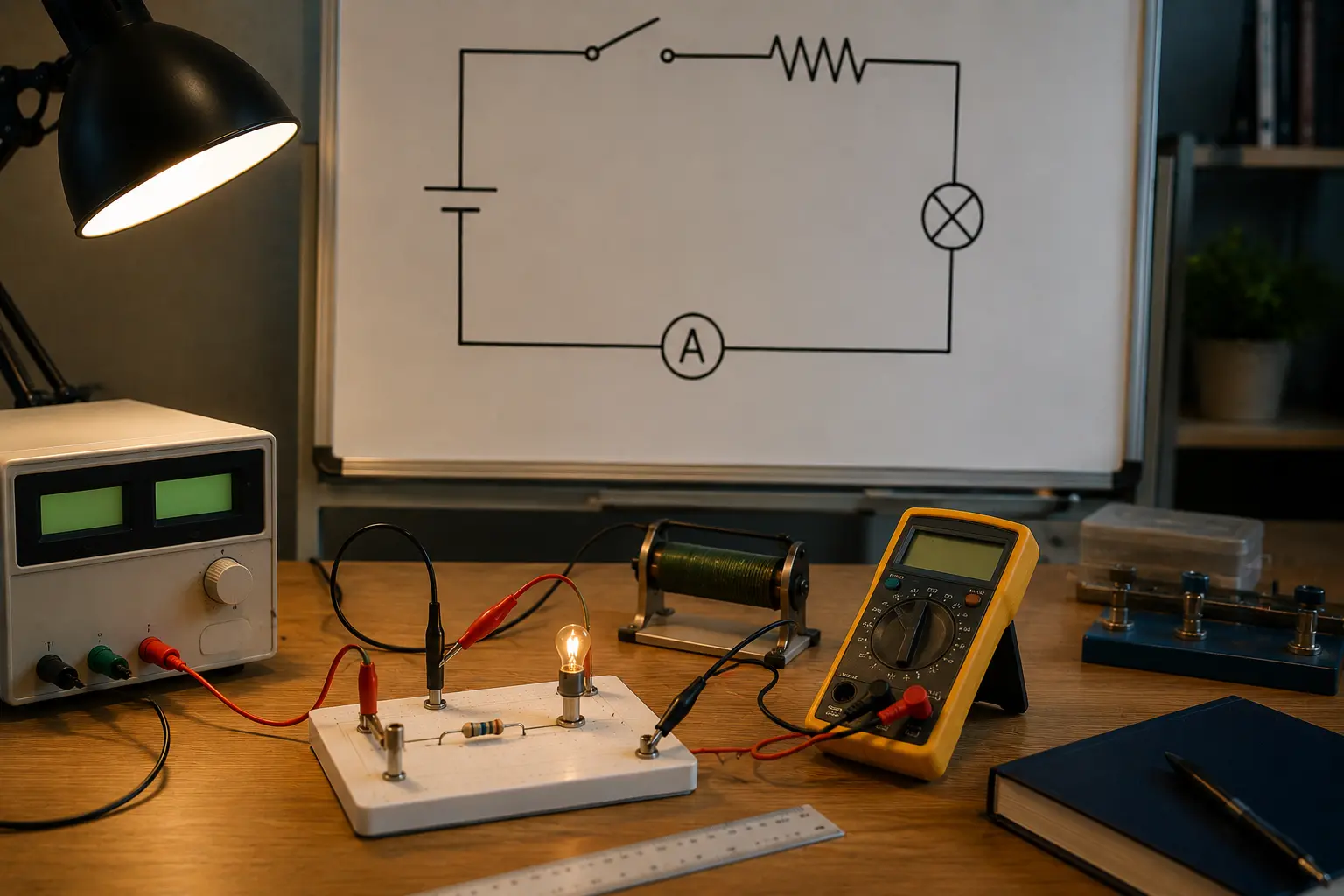
Ohm's Law, series and parallel circuits, resistance and electrical power and energy. Many students walk in confident from National 4 — and National 5 raises the bar considerably. The specific error is subtle: it's rarely that they can't do the calculation, it's that they apply the right formula to the wrong circuit, using V = IR before identifying whether the circuit is series or parallel.
The improvement comes from understanding why a circuit behaves as it does, not just pushing numbers through a formula. Once a student grasps why current is the same at every point in a series circuit, they stop guessing and start reasoning — usually the difference between a disappointing grade and a strong one.
Waves and Radiation
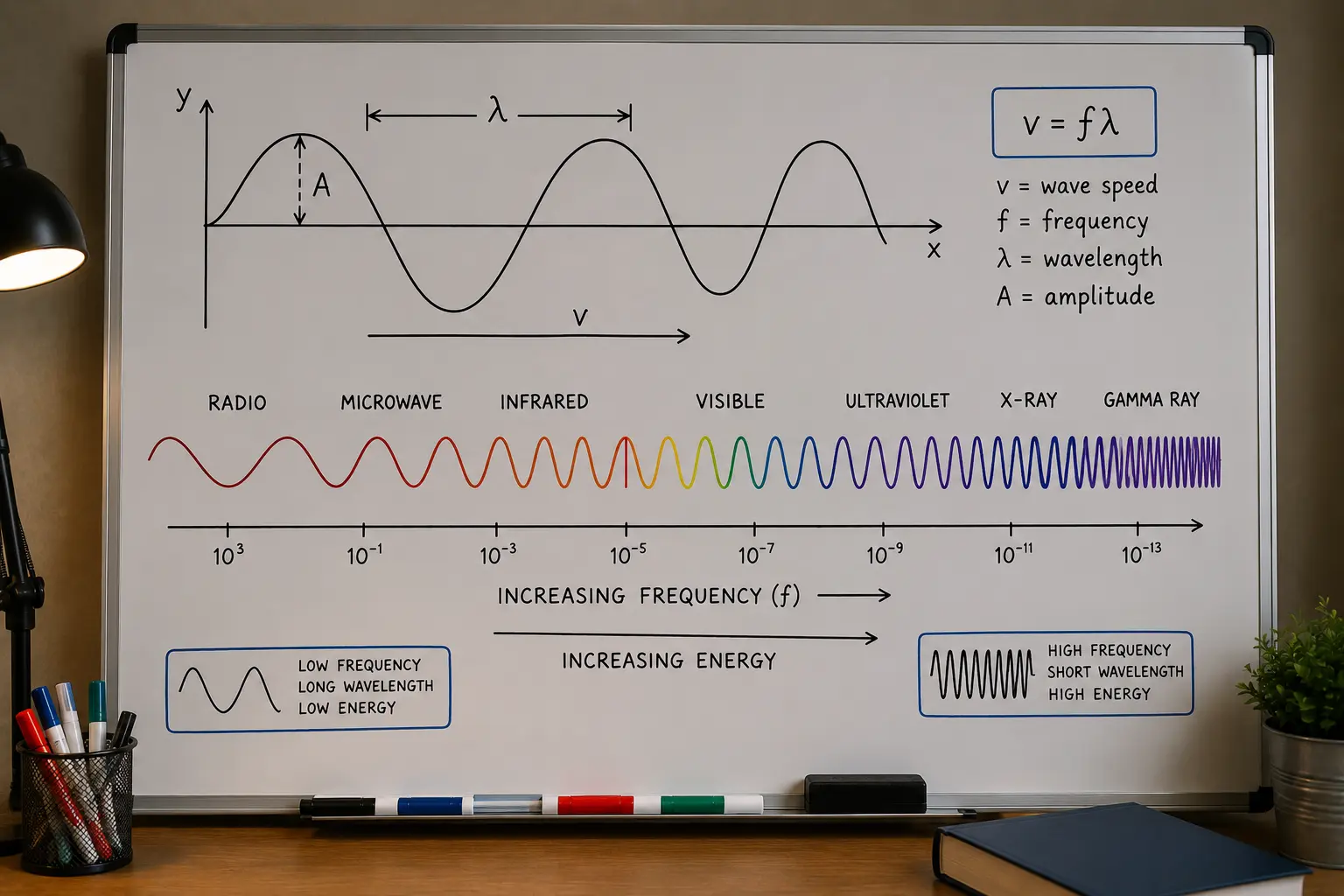
Wave properties, frequency and wavelength, the electromagnetic spectrum, and nuclear radiation — alpha, beta and gamma, half-life, activity, absorption and penetration. The radiation questions surprise students more than any others, because they're mostly conceptual: "Explain why gamma radiation is suitable here but alpha is not." There's no formula to reach for — only understanding.
I teach this unit through every category of radiation question SQA has produced, focusing on the application and evaluation questions that reward genuine understanding. The reassuring truth: it's one of the most learnable units in the course — once a student stops searching for formulas where there are none.
Past papers — the most important preparation you can do
For National 5 Physics, past paper practice is not a supplement to studying. It is the studying. The SQA exam follows consistent, recognisable question patterns year to year. Students who have worked through the last five to seven years of papers — with the marking scheme open beside them — understand the format, the language and the level of detail the exam demands. Students who haven't are always playing catch-up, no matter how well they know the content.
In my sessions, past paper work is central, not an afterthought. We don't set a paper to be marked next week — we work through questions together, in real time, discussing the marking scheme line by line. By the time my students sit the actual exam, they have already seen and practised every type of question likely to appear. Familiarity removes fear, and fear is what costs students marks under pressure.
Online and in-person National 5 Physics tutoring in Glasgow
In-person sessions take place at our centre at Suite 2/14, McCormick House, 50 Darnley Street, Glasgow G41 2SE. We're based in Pollokshields on the Southside, easily reached from Newton Mearns, Giffnock, Shawlands, Cathcart and across the wider city. For many local families, a face-to-face session close to home makes all the difference to consistency.
Online sessions are available to students anywhere in Scotland, and work just as well as in-person — a shared digital whiteboard, screen sharing for past papers, and a video call that keeps the session personal. One honest observation: students who feel anxious in face-to-face academic settings often do better online at first, because the familiar environment of home takes the pressure off those important early sessions.
Frequently asked questions — National 5 Physics tutoring
What does National 5 Physics cover in the SQA exam?
How long does it take to improve in National 5 Physics with a tutor?
Do you help with National 5 Physics past papers?
Where do you offer National 5 Physics tutoring in Glasgow?
What is the hardest part of National 5 Physics?
Book a National 5 Physics tutor
Give your child the best shot at National 5 Physics
If the confidence just isn't there yet, you don't have to leave it to chance. Tell us the level and we'll come back the same day with availability and a clear quote.