
Higher Physics Tutor Glasgow — Expert SQA Tuition for the Year That Defines What Comes Next
Our Dynamic Universe, Particles and Waves, Electricity — taught one-to-one by a Glasgow SQA specialist with 15+ years' experience, built around past papers and method-mark technique.
It usually happens by mid-October. The first 5-mark question lands — the one that asks you to recall a principle, apply it to a situation you have never seen before, and evaluate your own reasoning, all in the time it took to answer one National 5 question. Students who cruised through National 5 on revision notes suddenly find a question with nothing to pattern-match against. That moment is not weakness — it is exactly what the Higher exam was designed to create.
I am Mohammad Raza, founder of Excel in MathSci, and I have taught Higher Physics in Glasgow for over fifteen years. Parents assume the jump from National 5 to Higher is "more of the same, just harder." It is not — and that difference is the difference between a C and an A.
This page covers the N5-to-Higher difficulty step, all three SQA Higher units — Our Dynamic Universe, Particles and Waves, and Electricity — and how method marks change the scoring game in ways most students never hear about until it is too late. Sessions are built around past papers and the SQA marking scheme, and the first session is always diagnostic, not a test. As part of our wider service as a physics tutor in Glasgow, we cover every SQA level from National 4 through to advanced higher physics. With the May exam circled on your calendar there is still time — but knowing where that date sits is where sensible planning starts.
Why the jump from National 5 to Higher Physics catches out even strong students
Most S5 students arrive expecting Higher to be National 5 with more content. It is not — and that single misconception is the most expensive one in Scottish secondary education. At National 5, a question asks one thing. At Higher, a 5-mark question is often asking three skills at once — recall a principle, apply it to an unfamiliar context, and evaluate whether the result makes physical sense. The content is not dramatically harder. The demand on thinking is.
The Higher exam is built to break pattern-matching. Questions are set in unfamiliar contexts specifically so rote recall cannot substitute for understanding. Students trained to recognise and replicate — rather than reason from first principles — hit a wall that has nothing to do with intelligence and everything to do with the strategy that got them through the year before.
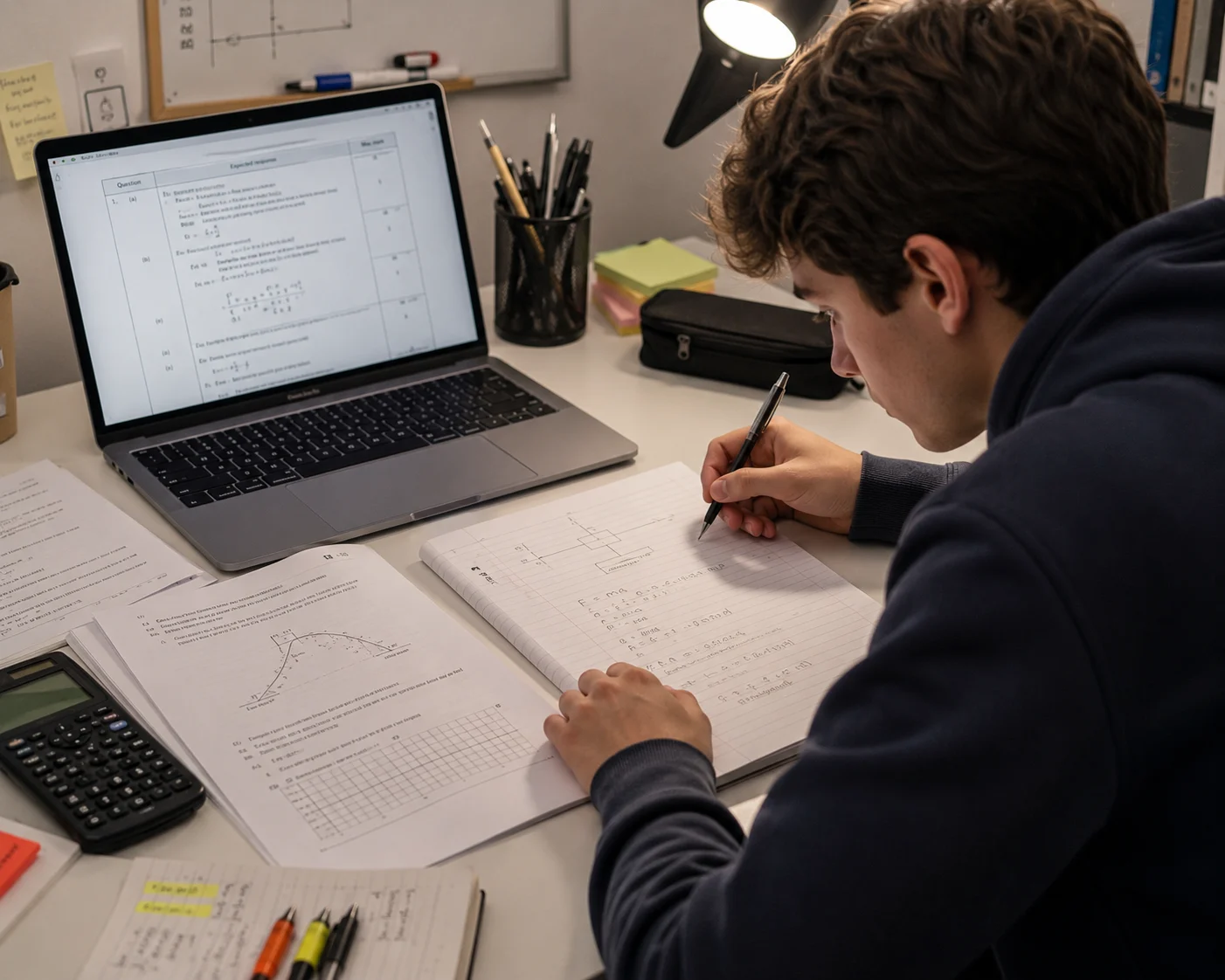
The SQA awards method marks for sound working, not just correct answers. A student who shows each step — labelling quantities, writing the formula before substituting — can earn two or three marks even when the final answer is wrong. Training a student to write auditable working moves grades without teaching any new content. — Mohammad Raza, Founder & Physics Tutor
Higher Physics units — what we cover and how we teach it
Higher is taught across three SQA units, and I cover each through the lens of what the exam actually rewards — not just what the textbook explains. Unlike National 5, Higher has genuine conceptual storytelling students often enjoy — and that engagement is also the trap, because understanding the story and scoring on the question are two different skills.
Our Dynamic Universe
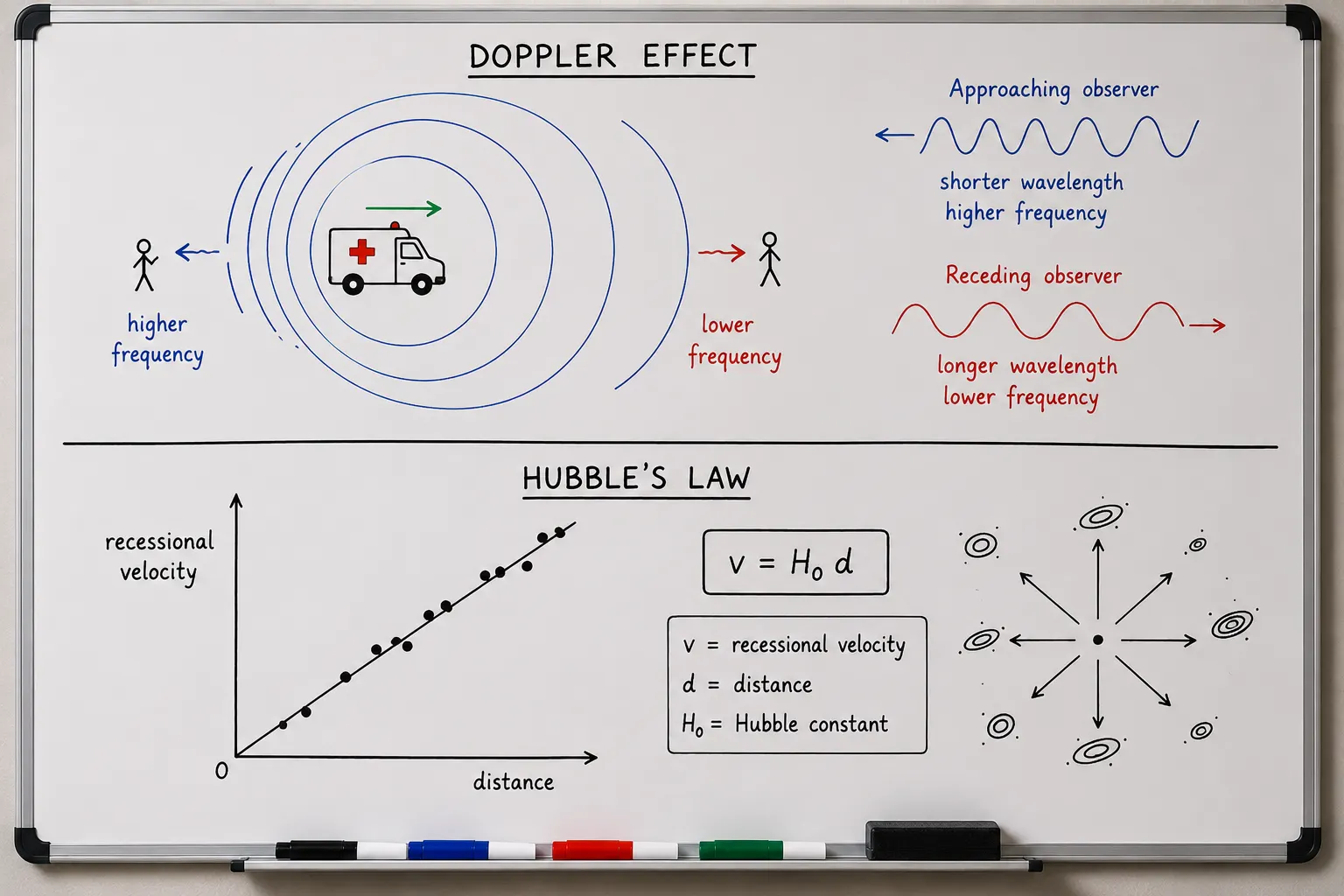
Kinematics at Higher level, gravitation, the Doppler effect, Hubble's law, the expanding universe and stellar physics. It is the unit students most often enjoy — and the enjoyment is where the danger lives. They grasp the Doppler effect instantly, then lose marks on the calculation because the question demands they identify whether the source or the observer is moving and pick the correct form of the equation. Hubble's law is a similar trap: they plot the graph and calculate the gradient, but cannot explain what it physically represents.
My approach is to teach two distinct skills explicitly: the concept you could describe at the dinner table, and the precision the exam rewards. From the first session we work real SQA past paper Doppler and Hubble's law questions with the marking scheme open — so students see, question by question, exactly where each mark is earned.
Particles and Waves
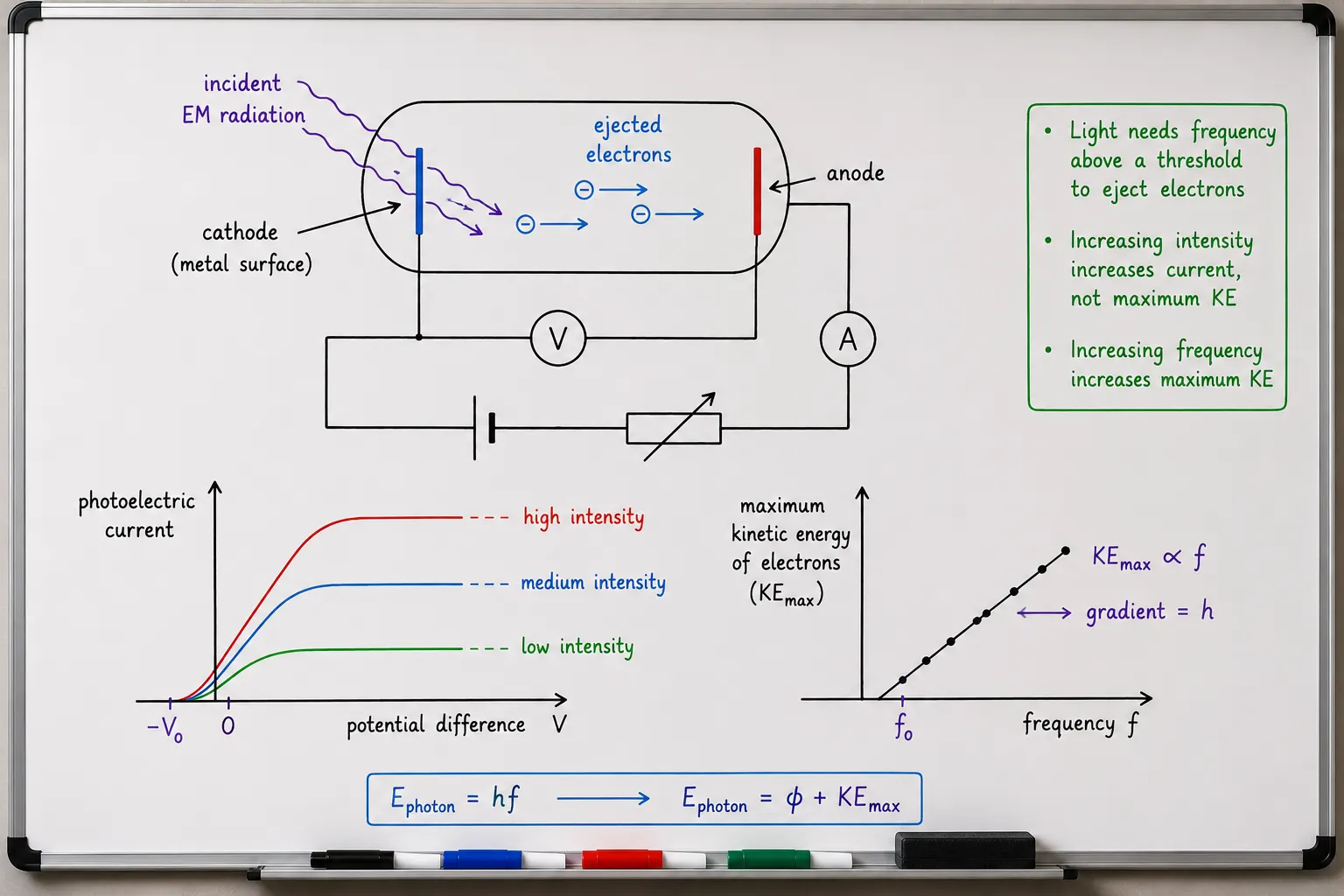
Wave-particle duality, the photoelectric effect, interference, diffraction and refraction — the unit that provokes the most anxiety. I'll be direct: in fifteen years of physics tuition in Glasgow I have not met a Higher student who could not be turned around on this unit, because the fear is almost always larger than the actual difficulty.
Here is an observation supported by the past papers: the photoelectric effect questions are some of the most predictable marks in the entire Higher paper. The SQA uses the same handful of patterns year on year. Handled correctly, this is where you build reliable marks, not lose them. I teach the unit as a strict sequence — simple to complex, never moving on until the previous idea is solid — so by May the question you feared most is the one you are relieved to see.
Electricity — internal resistance, EMF, potential dividers, capacitors
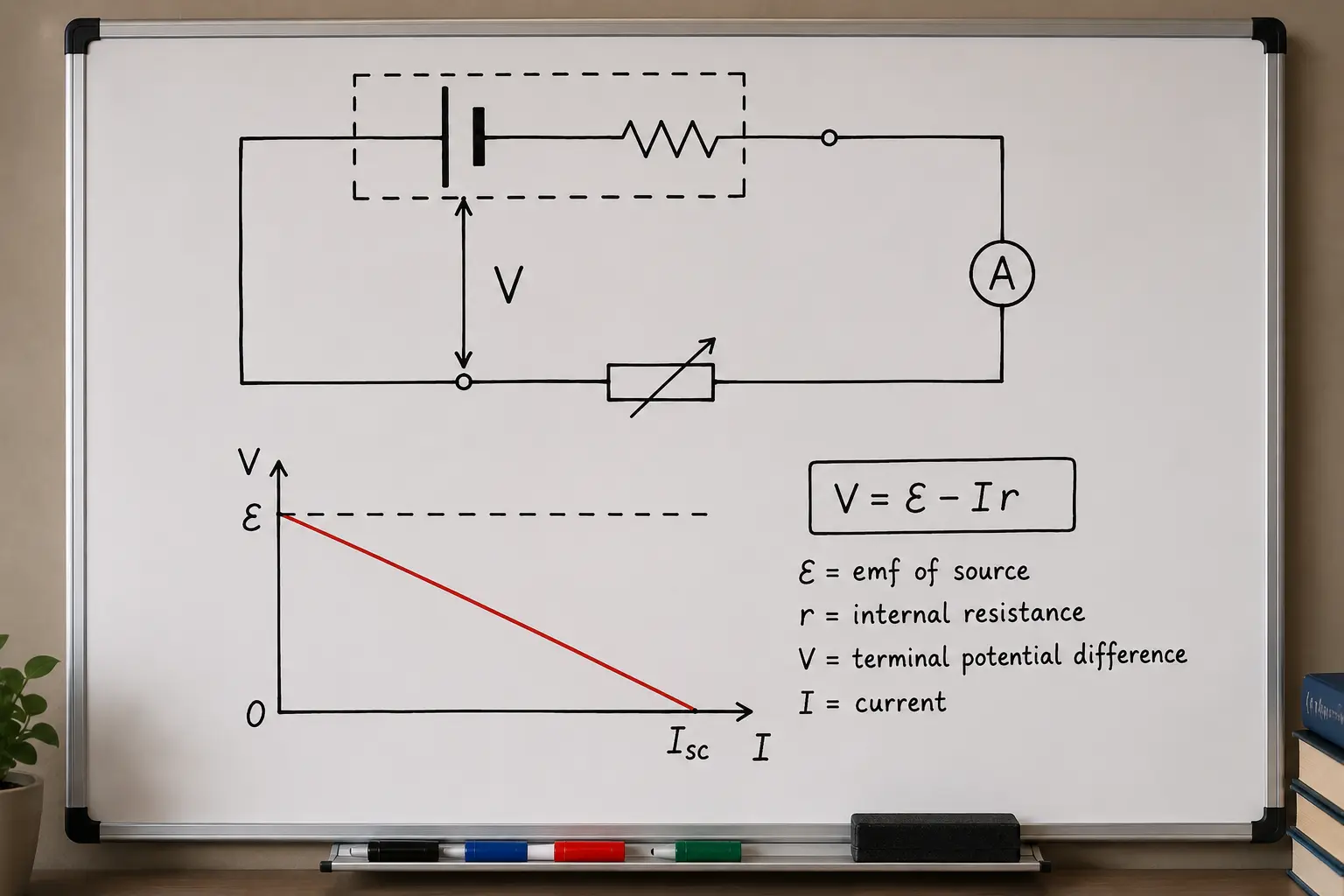
This unit has the most marks at stake for the smallest amount of genuinely new physics in the Higher course. The difficulty is not the content — it builds directly on National 5 circuits — but the layered question structure, where one early decision shapes everything that follows. Internal resistance is, year after year, the worst-handled topic in the paper. The SQA constructs questions where an early slip about which resistance you are dealing with quietly poisons every calculation that follows: students solve the wrong circuit beautifully, get a plausible answer, and never notice the error. The National 5 Physics foundation matters here — the gaps that formed there are almost always the same gaps I find at Higher.
The fix is a fixed checking routine — a short sequence a student runs before committing to any internal-resistance answer. The first step is always: what is actually being measured here? Not "what formula applies?" — that comes second. Once a student runs this routine automatically, internal resistance stops being the question that derails a paper and becomes a recognisable, repeatable pattern. I have seen this shift happen in a single session, once the routine clicks.
Past papers and method marks — the two things that move Higher grades fastest
For Higher Physics, working through past papers with the SQA marking scheme open alongside is not a supplement to studying — it is the studying. The wording and contexts change, but the structure of what a 5-mark question asks, the detail an answer needs, and the way method marks are allocated are all visible in the paper record going back seven or eight years. Students who have worked through that record understand the format, the language and the precision required. Students who have not are at a disadvantage no amount of content revision will fix.
Method marks are the part of Higher scoring most students never have explained to them. A student who writes the correct formula, substitutes correctly, and arrives at a wrong answer because of a unit-conversion slip may still earn three of five marks. In sessions I don't just teach the physics — I teach the writing of the answer, so an examiner can follow every correct step and award every mark it has earned. It is the single fastest way to move a Higher grade in the weeks before the exam.
Online and in-person Higher Physics tutoring in Glasgow
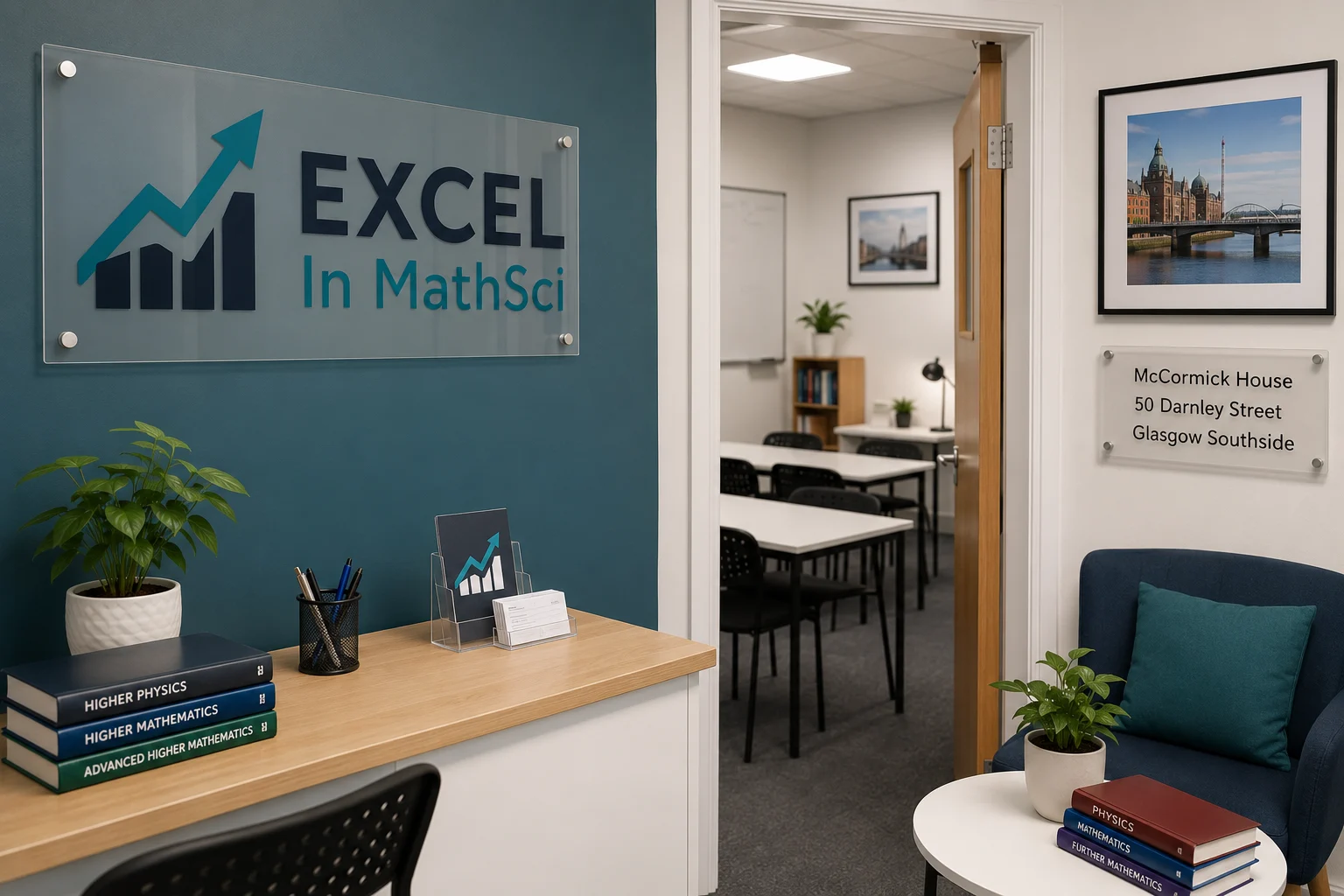
In-person sessions are held at Suite 2/14, McCormick House, 50 Darnley Street, Glasgow G41 2SE — on the Southside, accessible from across the city. A significant number of my Higher students come from Giffnock and Newton Mearns. One-to-one is the standard format, with small group sessions on request.
Online sessions are available anywhere in Scotland — I work as an online physics tutor Scotland-wide, and the format works identically: digital whiteboard, screen sharing, SQA past papers worked through in real time. S5 is a uniquely pressured year — UCAS deadlines, prelims, school commitments — and many students choose online not because they cannot travel, but because the flexibility is the difference between fitting sessions in and not fitting them in at all.
Frequently asked questions — Higher Physics tutoring
When is the Higher Physics SQA exam?
How is Higher Physics different from National 5 Physics?
What is the hardest topic in Higher Physics?
How long does it take to improve a Higher Physics grade with a tutor?
Do you cover the Higher Physics assignment as well as the exam?
Book a Higher Physics tutor
There is still time before the May exam
If a prelim has just come back and the grade isn't what it needed to be, that's not the end of the story. Knowing exactly where the marks were lost is the first step to getting them back.